Who Is a Product Designer Now?
AI is changing how we build products. But the bigger shift might be what we expect from the people building them.
AI is changing how we build products. But the bigger shift might be what we expect from the people building them.
Rather watch than read? Here’s the video version — under 5 minutes.
The product designer’s job is changing.
Not because AI is going to replace every designer, or because we suddenly have a new set of tools to learn. It’s changing because the distance between an idea and a working product is getting smaller.
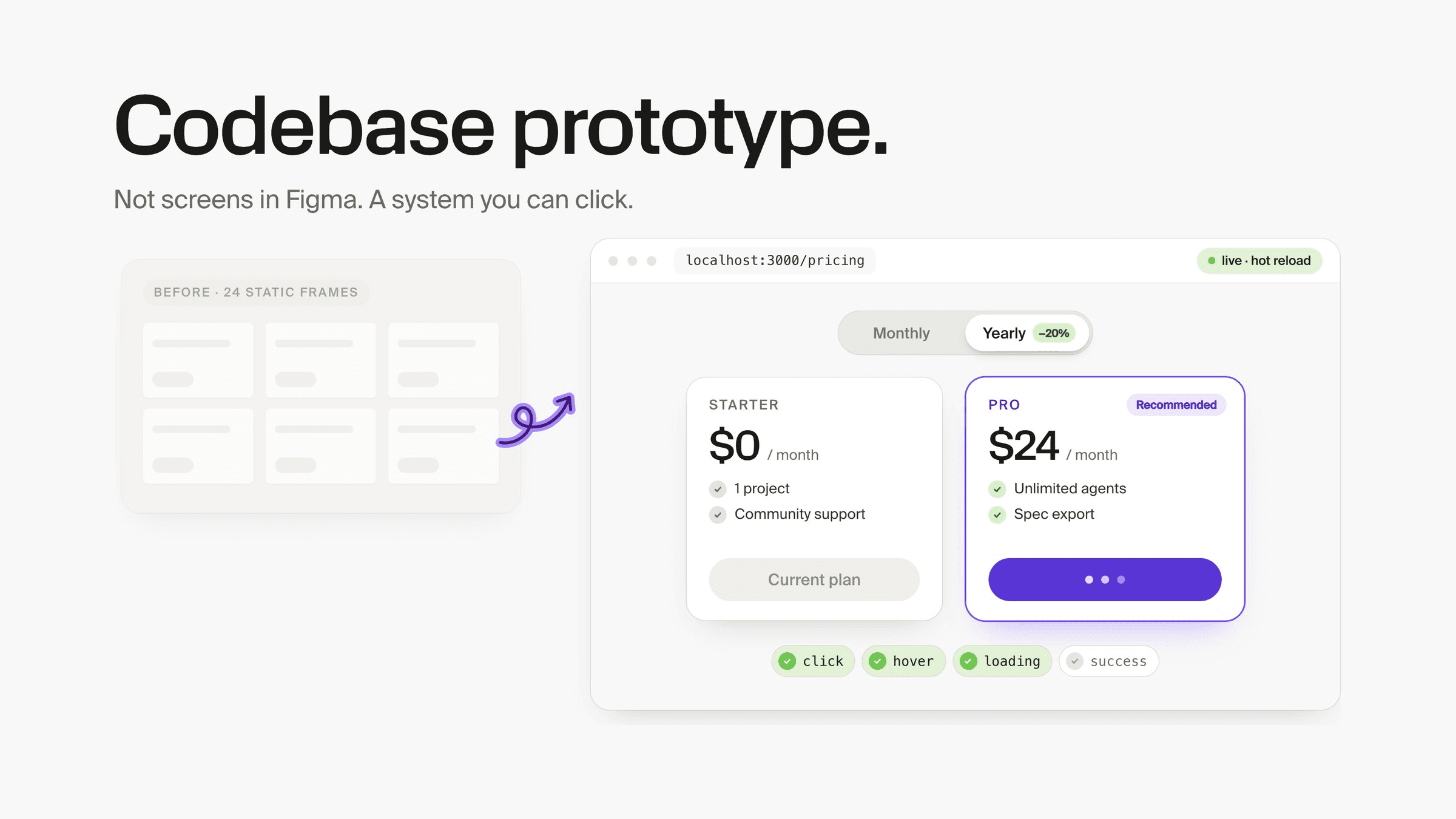
I can prototype directly in code, orchestrate agents, test real user flows, and ship something that actually works — often before I would have finished polishing the equivalent screens in Figma.
Research that used to take days can happen in hours. Design systems can live closer to the code. Prototypes don’t have to be disposable mock-ups anymore. They can become the product itself.
I think this is a genuinely good thing.
But it also raises a question we don’t talk about enough:
When building becomes easier, what actually makes a product designer valuable?
The cost of making is going down
For a long time, a significant part of design work was the work of making.
You had to create the screens, connect the flows, prepare the components, document the behavior, and hand everything over to engineering. Getting from an idea to something people could actually use required time, specialized skills, and coordination.
Now, much of that process is getting faster. The tools are more accessible. Prototyping is cheaper. More people can experiment with product ideas without going through the traditional design and development process.
And I don’t think we should resist that.
Product managers can build prototypes. Developers can shape interfaces. Founders can turn an idea into something real over a weekend.
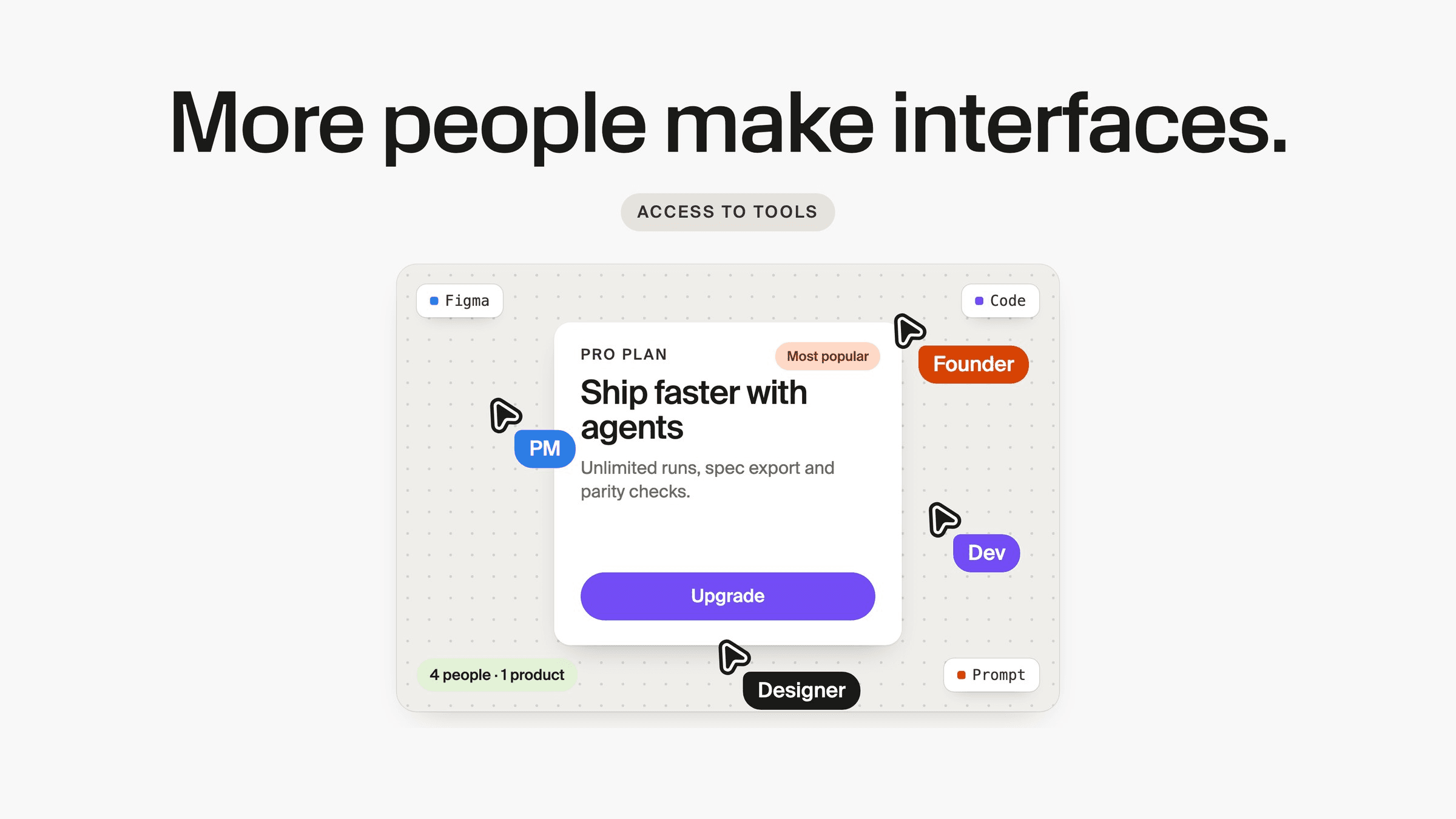
Design doesn’t have to happen in Figma. It doesn’t belong exclusively to one role. The more people can participate in building products, the more opportunities there are to explore ideas that might never have been built otherwise.
But easier creation doesn’t automatically lead to better products.
It just means we can create more of them.
Speed is a tool, not the goal
There’s a subtle risk in all of this.
When something becomes faster and cheaper to produce, we naturally start doing more of it. We can generate more screens, test more directions, ship more features, and produce more prototypes.
At first, that sounds like progress. And it can be. Speed gives us more opportunities to experiment, learn, and improve.
But somewhere along the way, speed can quietly turn from a tool into the goal itself. We start measuring progress by how much we’ve produced instead of what the product actually achieves.
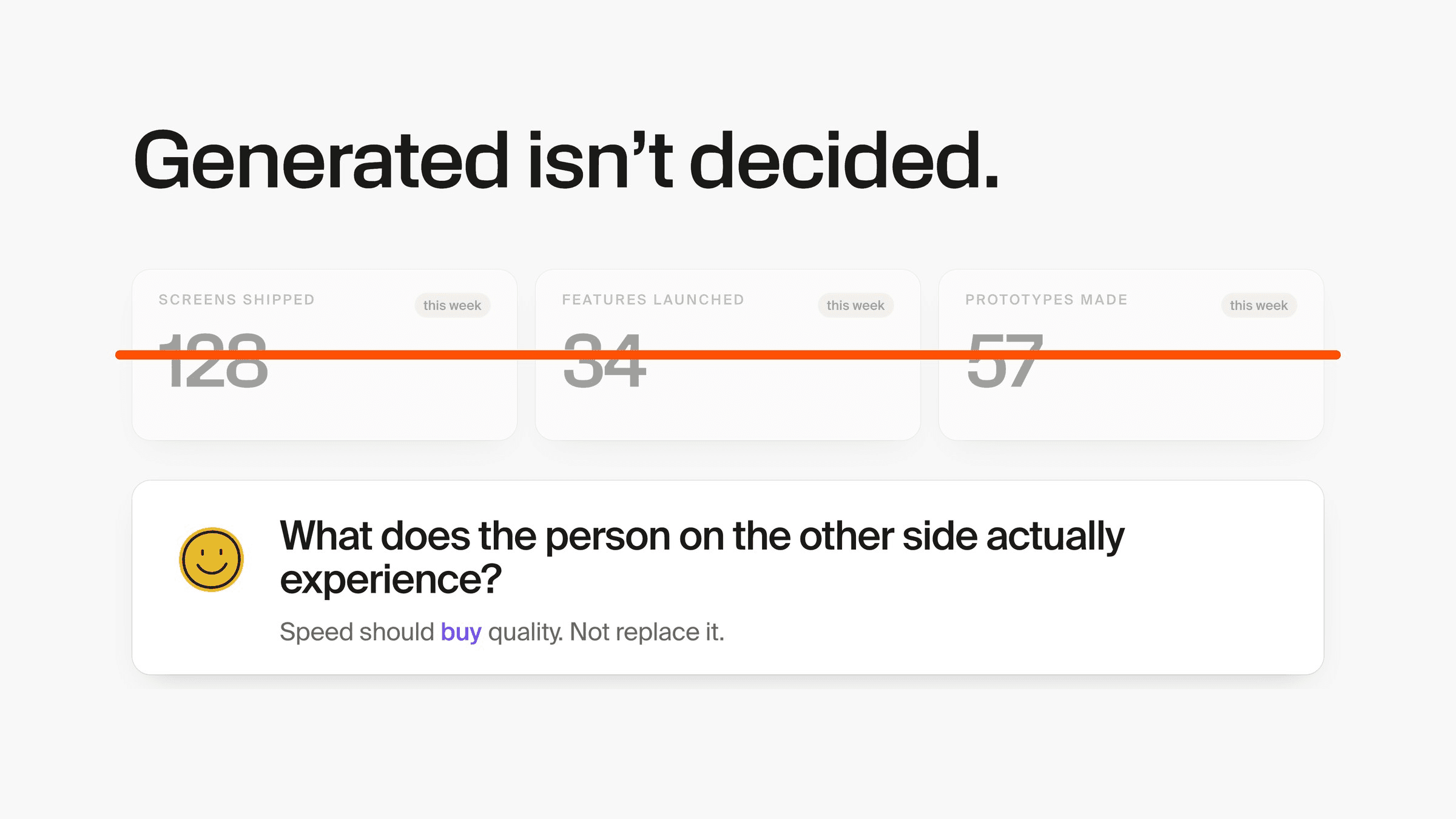
Did we ship the feature? Did the prototype work? Did the interface look good in the demo?
Those are useful questions, but they’re not enough.
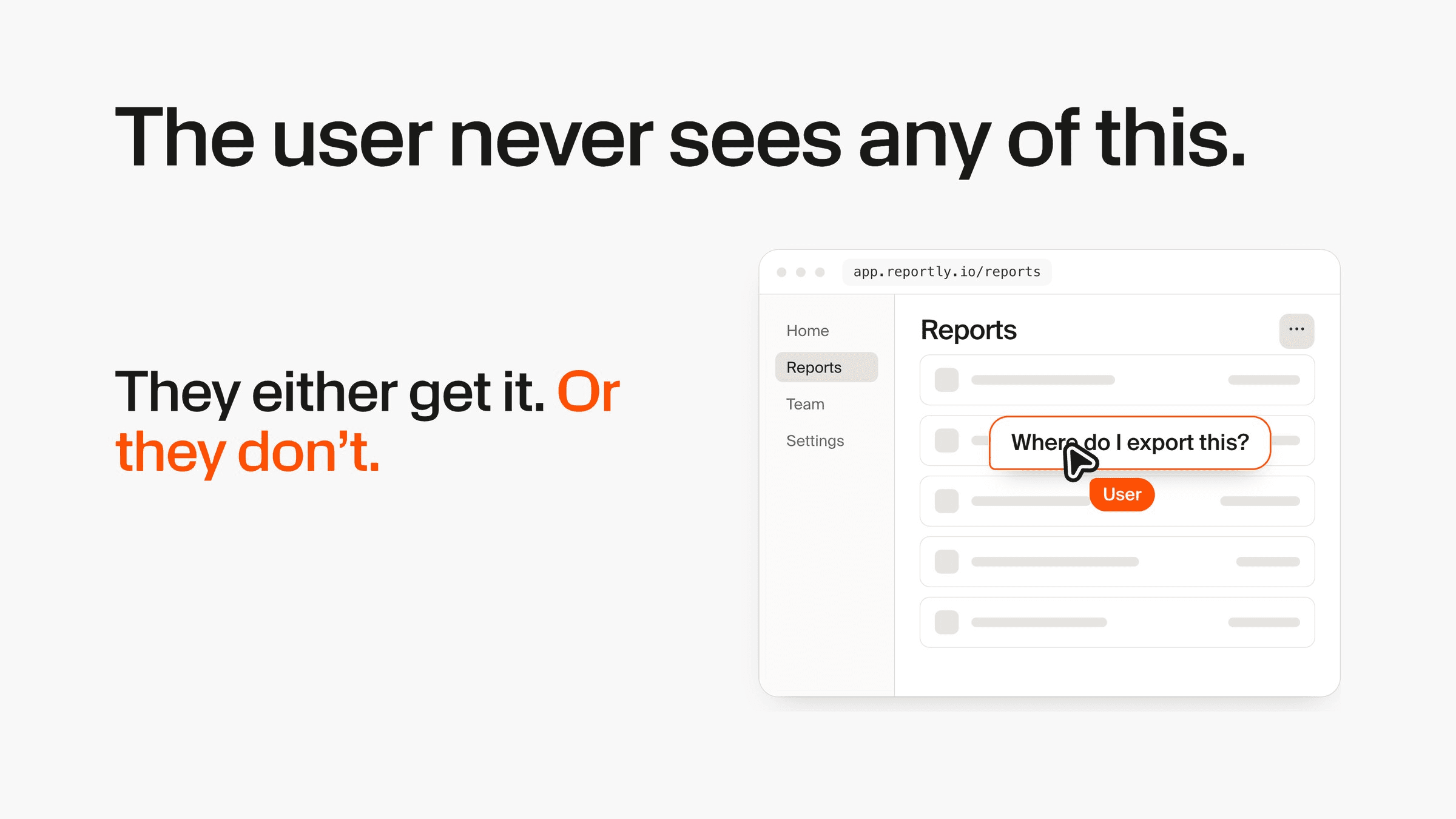
The user doesn’t care how quickly we built the interface. They don’t see our tokens, component architecture, agent workflows, or documentation. They experience the product.
They either understand what to do, or they don’t. They either solve their problem, or they struggle to.
The same applies to the business. A beautifully structured design system is valuable because it helps a team build and maintain a better product. The system itself isn’t the outcome.
We shouldn’t replace quality with speed. We should use speed to get to better quality.
Generated isn’t decided
One of the things I find most interesting about AI is how easy it has become to get something that looks plausible.
You can describe an interface, generate a layout, and get something that looks polished in minutes.
But looking plausible and being the right solution are two different things.
Does the interface solve the actual problem? Does the flow make sense when you use it, not just when you look at it? What happens in the edge cases? What trade-offs are we making? Is there a simpler way to achieve the same outcome?
These questions existed long before AI. What’s changing is that the barrier to producing a convincing answer is getting much lower. And that makes it easier to mistake a convincing answer for a good one.
The risk isn’t necessarily that AI creates bad design. The risk is that we stop questioning the output because it was fast to produce and looks good enough.
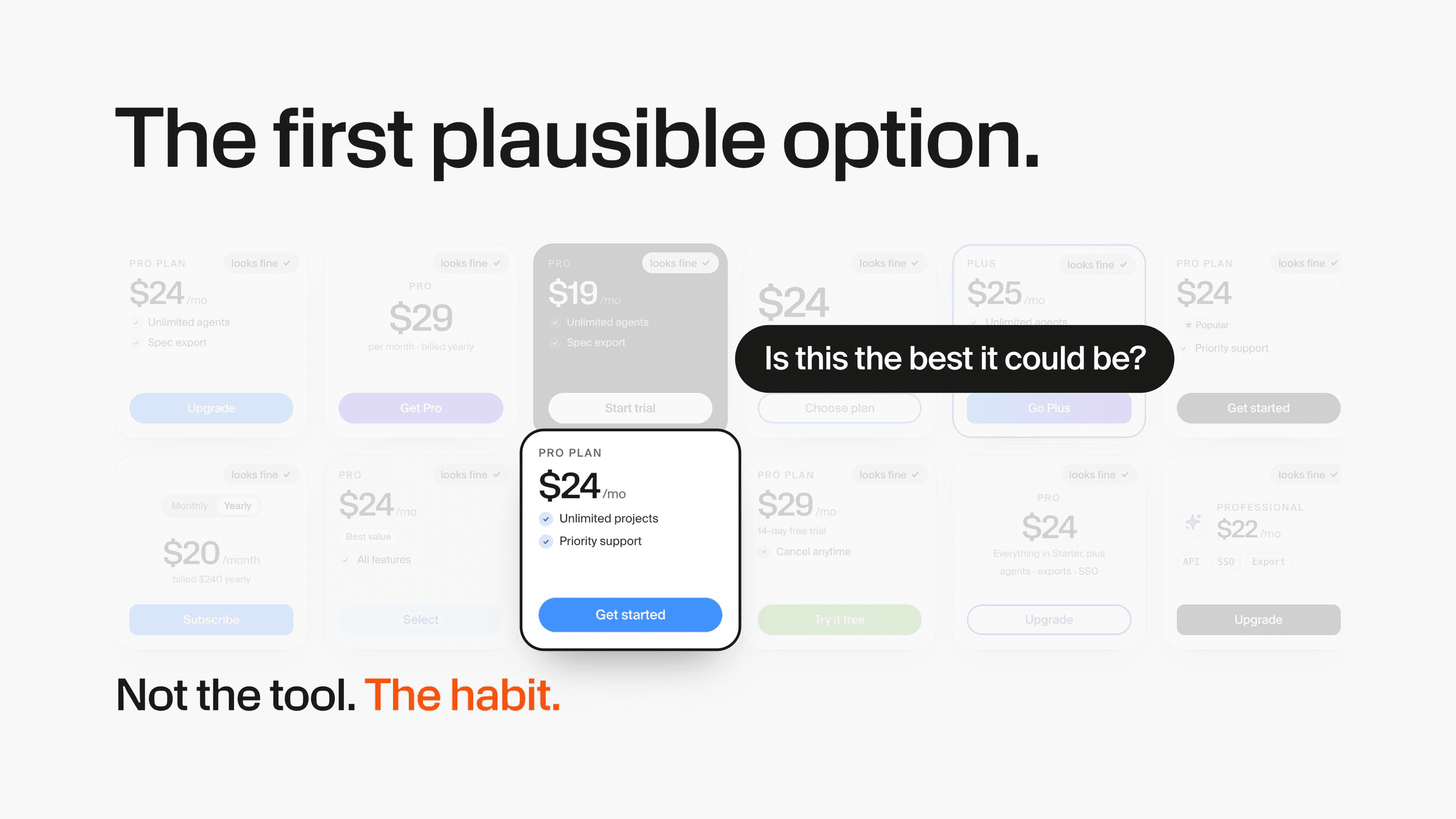
That’s one way products can start to feel increasingly similar. Not because everyone uses the same tool, but because teams accept the first plausible solution instead of asking whether it’s the best one for their users and their context.
AI can give us options. It can help us explore directions. It can even help us evaluate our work.
But we still need a clear understanding of what we’re trying to achieve and what quality means in that specific context. Otherwise, we’re optimizing the production of answers without knowing whether we’re answering the right question.
So, what is the designer’s role now?
I think we need to separate access to design tools from design expertise.
Being able to generate an interface doesn’t mean you know how to design a product.
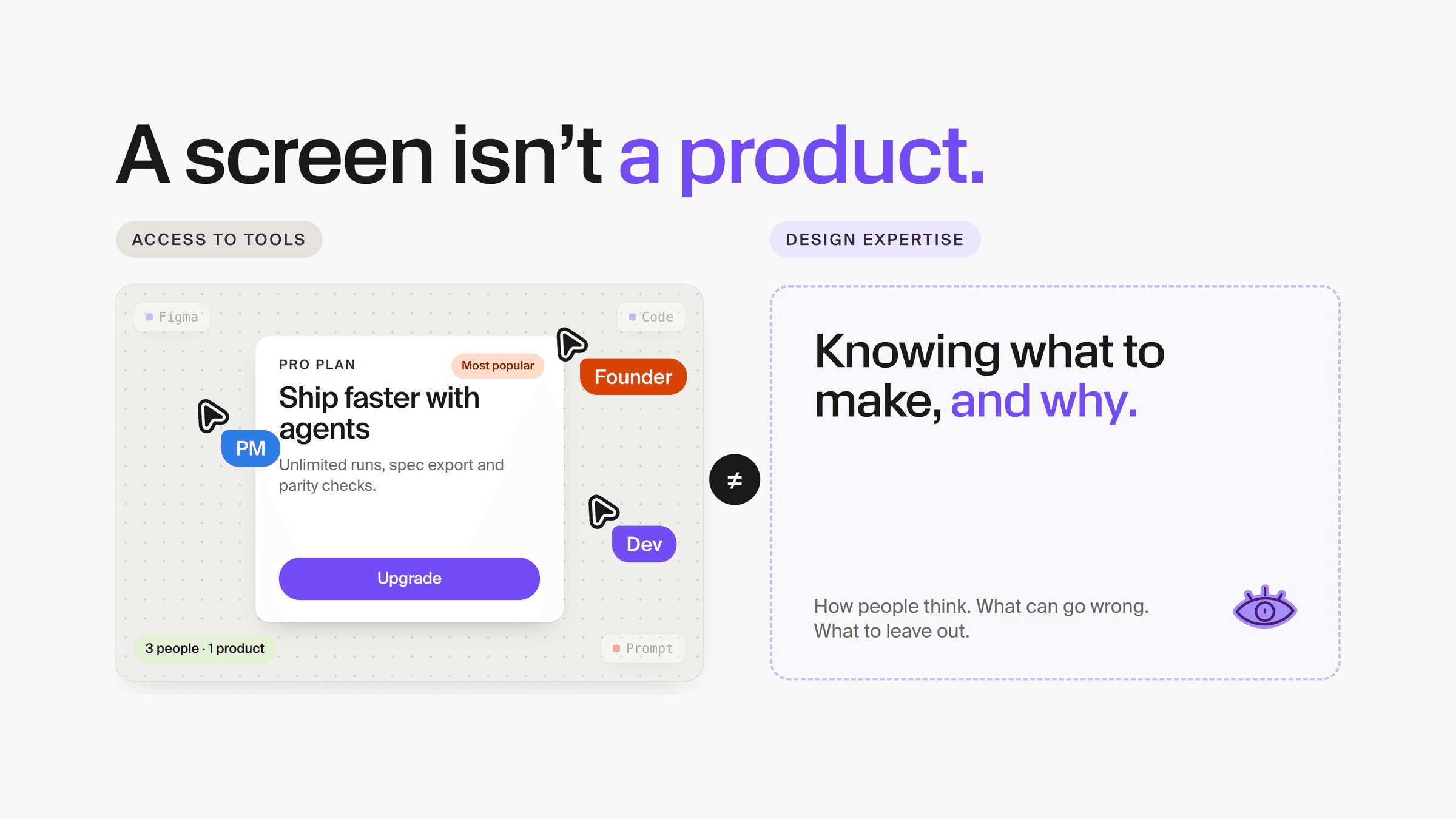
Design is understanding how people think and behave. It’s structuring information, anticipating edge cases, balancing competing needs, and making hundreds of decisions come together into a coherent experience.
AI can help with all of that. It can generate alternatives, suggest patterns, write code, and even identify usability issues. But having access to these tools doesn’t automatically give you the judgment to know what to ask for, what to reject, or what’s still missing.
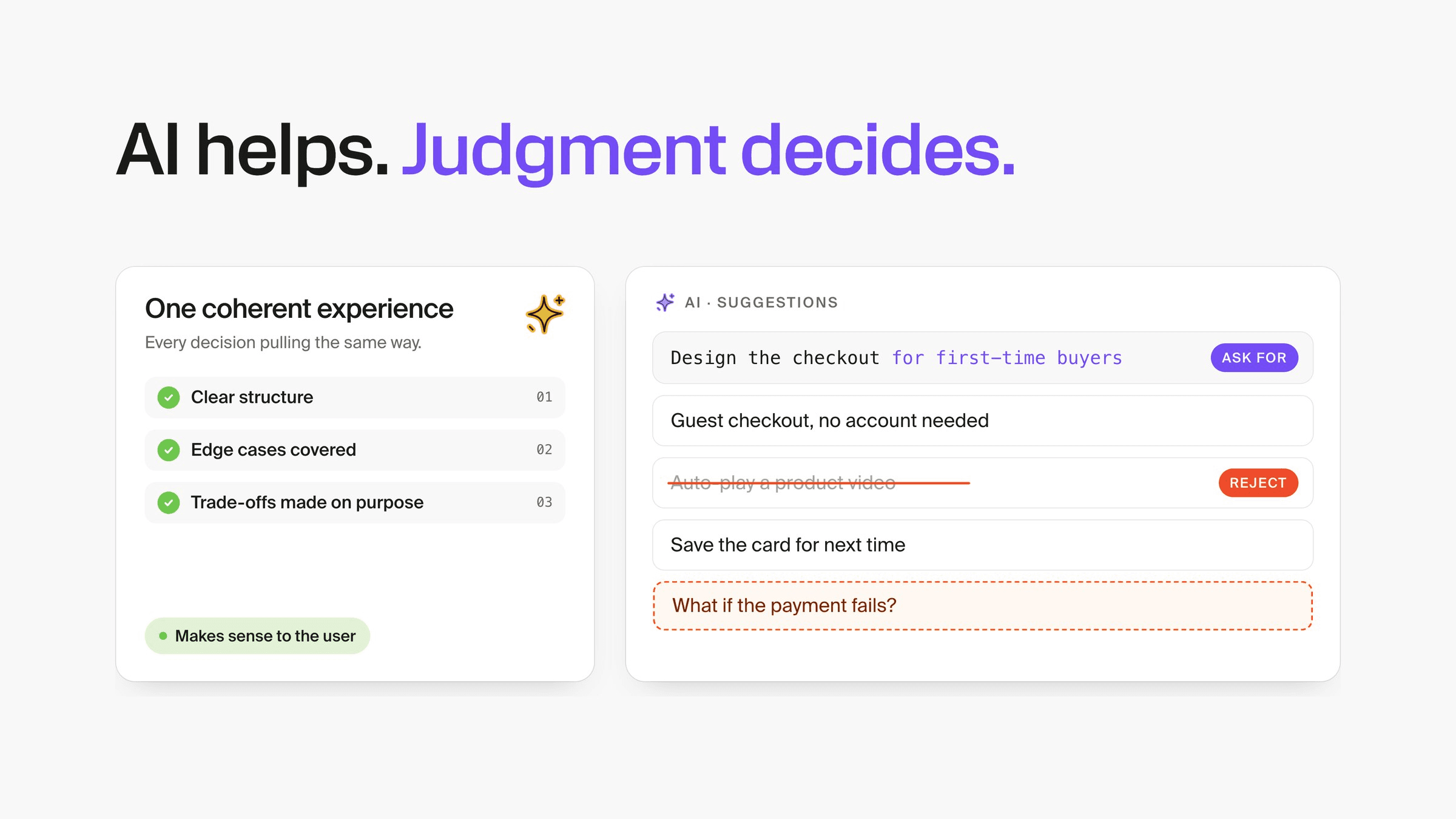
That’s what designers spend years developing: craft, pattern recognition, and the ability to see beyond the screen to the experience as a whole.
A developer can build a perfectly functional interface. A product manager can identify a real user problem. A founder can have a clear vision for a product. These are all valuable contributions.
But the ability to build something and the expertise to evaluate its design are different things.
Experience helps you recognize patterns, anticipate consequences, spot inconsistencies, and understand why a seemingly small decision can affect the entire experience.
It doesn’t guarantee you’re right. But it gives you a stronger basis for making decisions — and knowing when something needs more work.
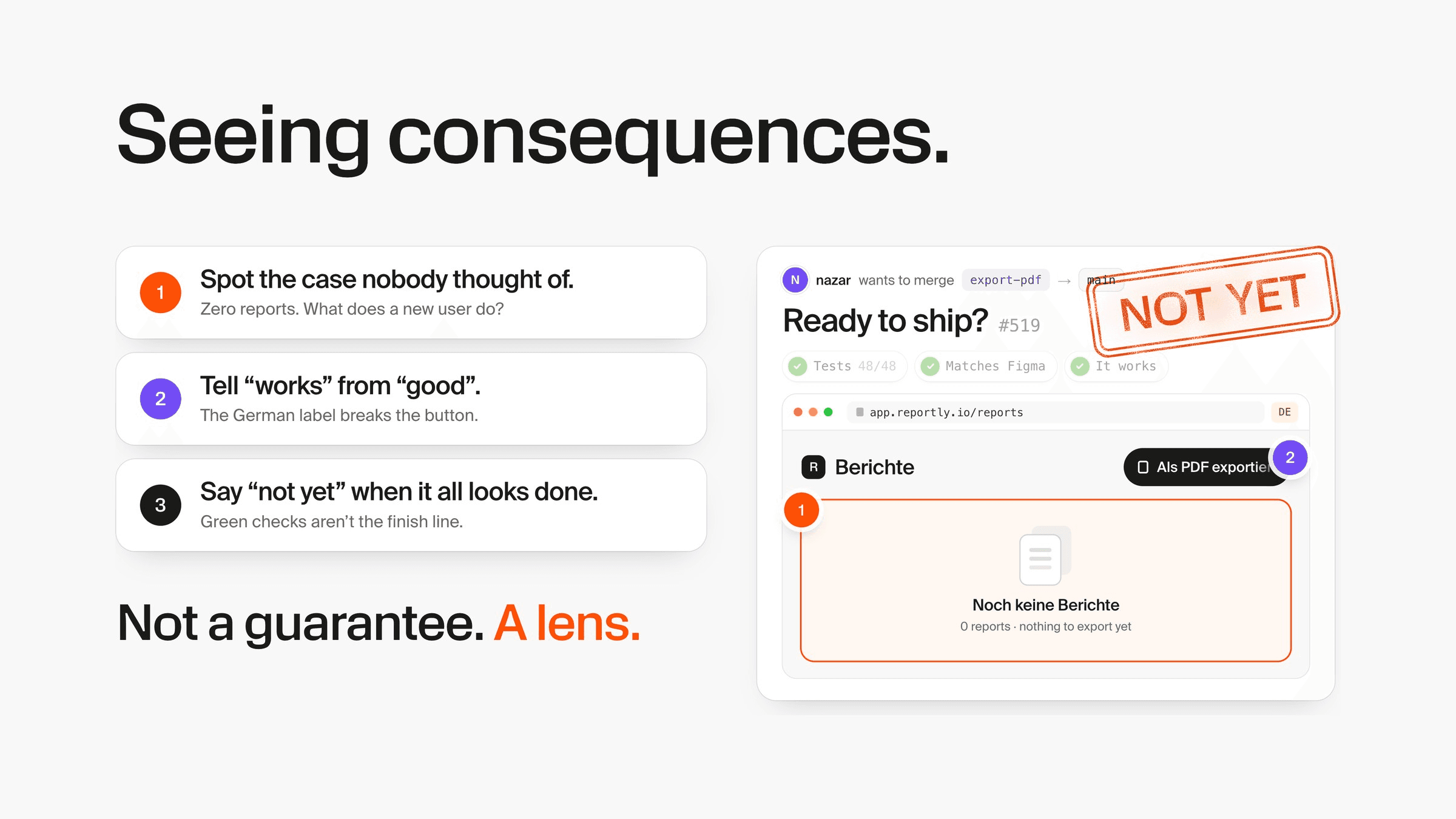
This isn’t about keeping design exclusive or pretending designers are always right. It’s about recognizing that design is a discipline, not just an output.
The barrier to creating an interface has dropped. The expertise behind creating a good one hasn’t become any less valuable.
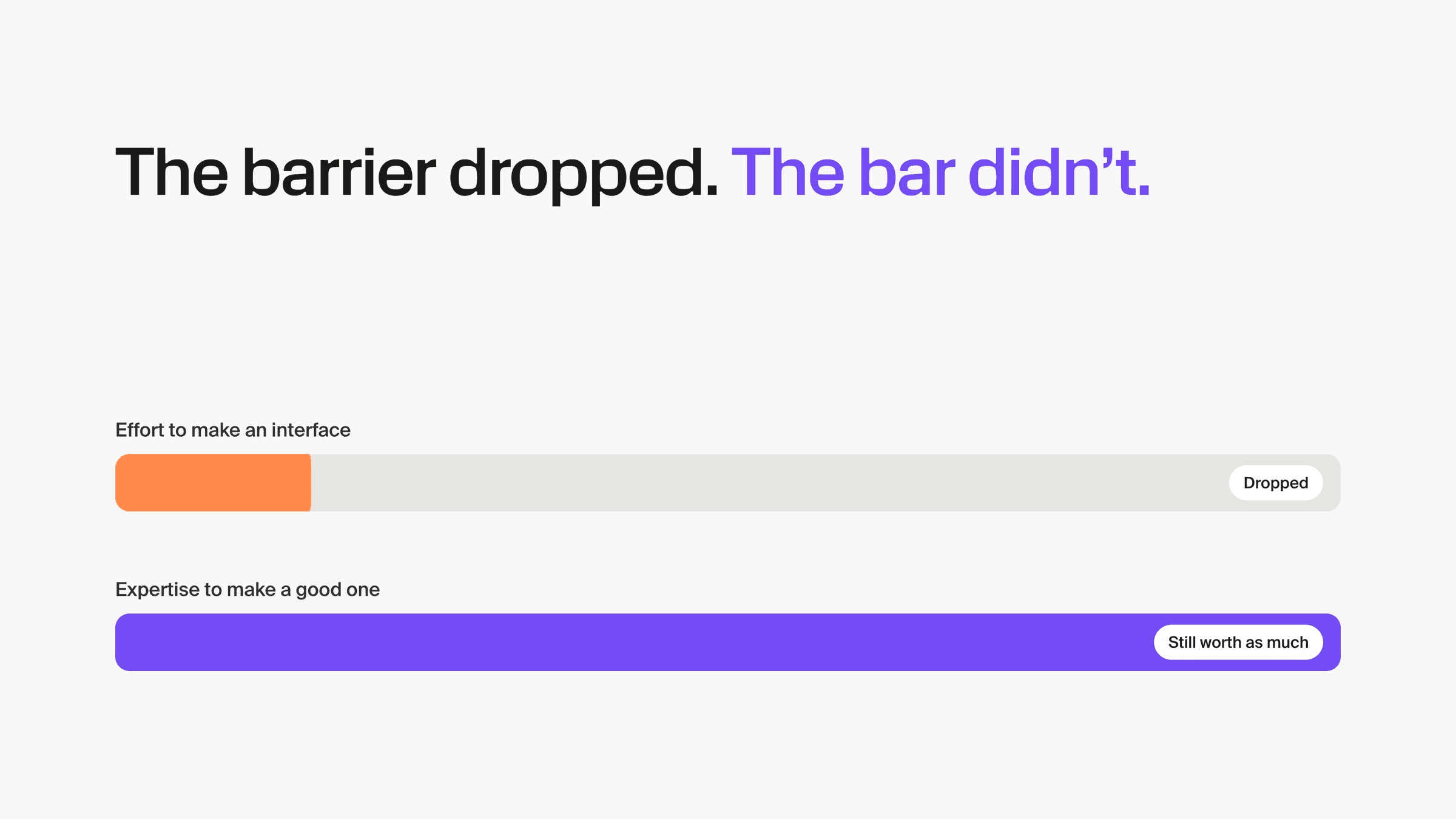
These skills become more visible when the act of making itself requires less effort.
For me, this is where the role of a product designer starts to shift. Less about owning every step of production. More about understanding the problem, exploring possible solutions, evaluating trade-offs, and helping the team make better decisions.
That doesn’t mean designers should own every decision. It means bringing design expertise into the process: making assumptions visible, challenging solutions that seem good enough, and helping the team understand the consequences of its choices.
And that includes being open to having your own decisions challenged, too.
Craft is more than making things look good
There’s something I think gets lost in conversations about AI and design: craft.
And by craft, I don’t mean spending hours adjusting pixels or polishing a screen until it looks perfect in a mock-up.
Craft is in how information is structured, how an interaction feels, how visual hierarchy guides attention, how edge cases are handled, and how all those details come together into a coherent experience.
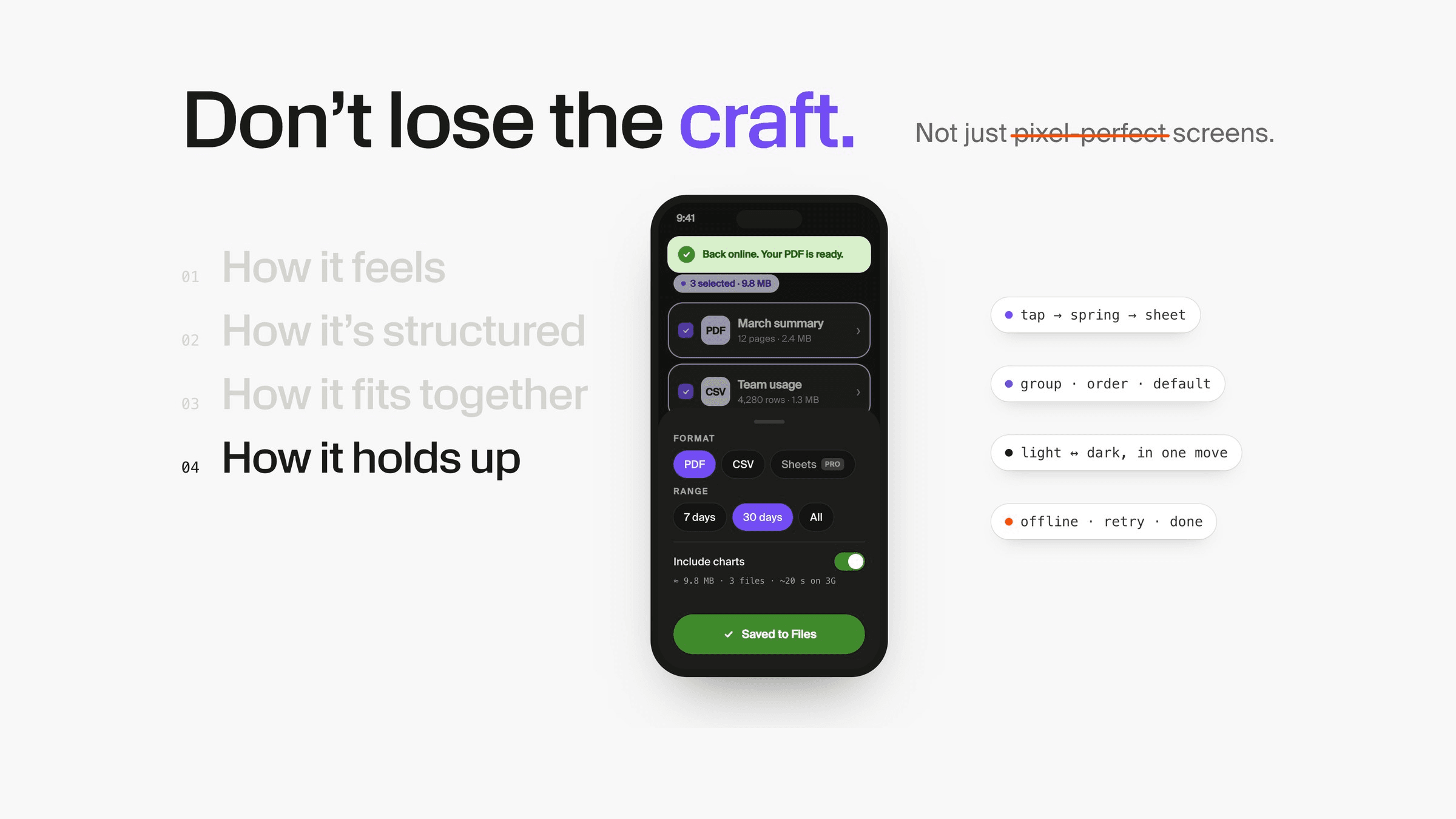
It’s knowing when something is technically correct but still feels wrong. When a layout looks clean but communicates the wrong thing. When a feature works as specified but makes the product harder to use.
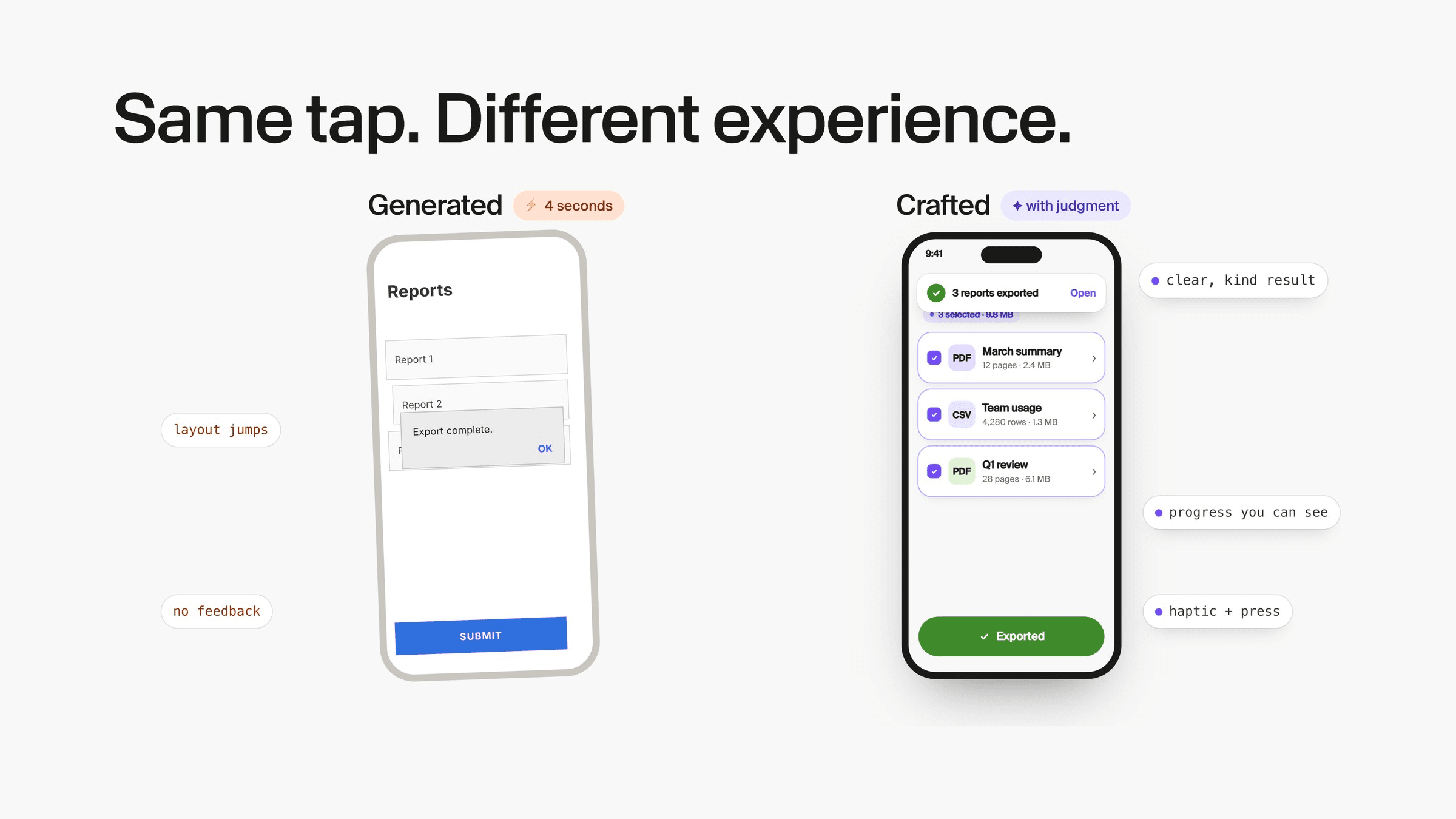
These are not always obvious problems. Often, the individual decisions look perfectly reasonable. It’s the combination of those decisions that makes the experience confusing, inconsistent, or unnecessarily complicated.
Design craft brings another layer of expertise to the process: understanding how the structure, behavior, visual language, and details of an interface work together to shape the experience.
And that expertise isn’t limited to making things look better. It’s about making the product clearer, more coherent, more usable, and more intentional.
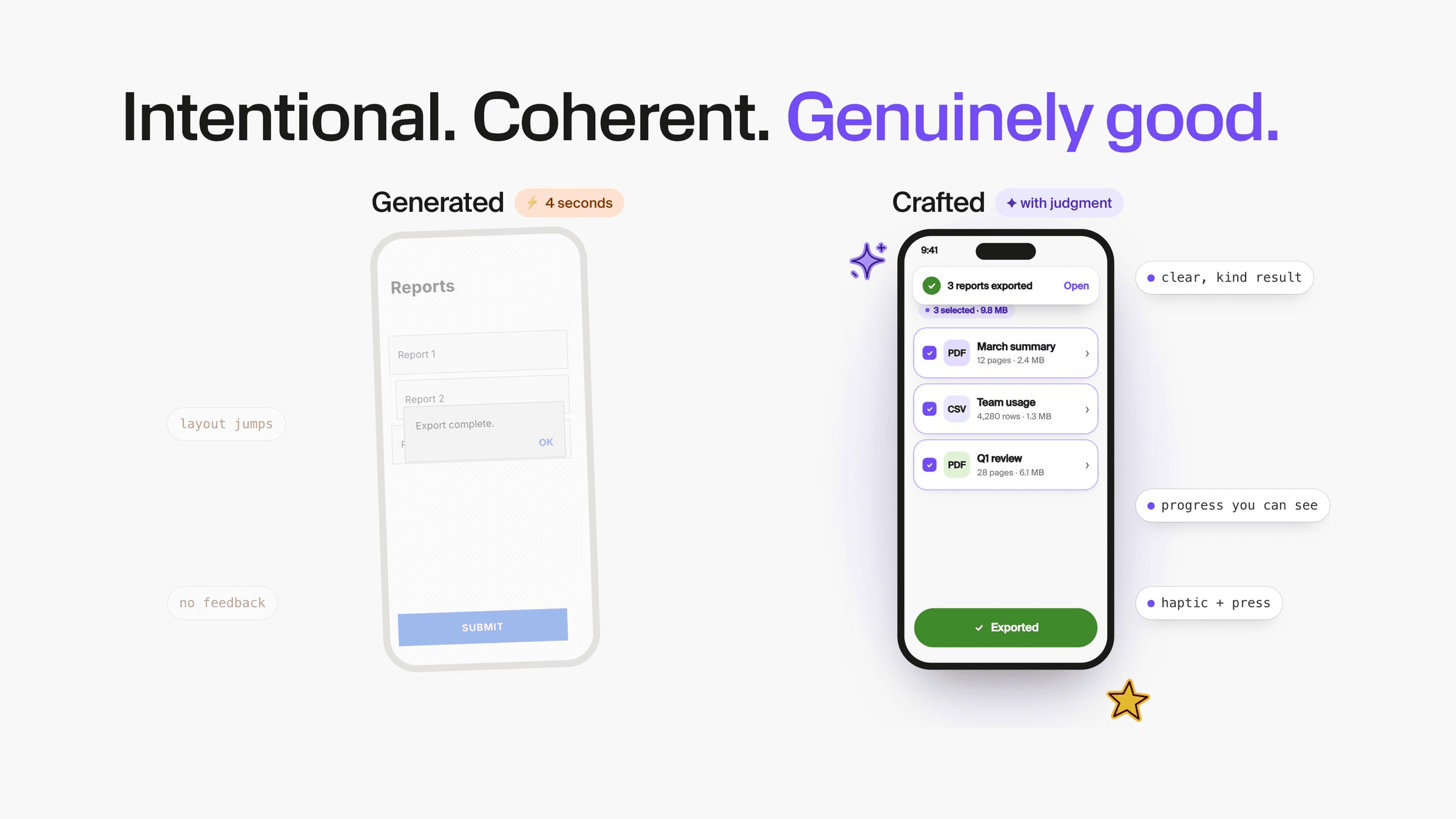
As the cost of producing interfaces continues to fall, the value of that expertise becomes easier to overlook — and more important to recognize.
Making more isn’t the same as making better
I don’t see AI as something designers should fight against. I’m excited about what it allows us to do.
We can spend less time on mechanical work, explore more ideas, and get closer to the actual product we’re designing.
But I don’t want us to confuse the ability to create more with the ability to create better.
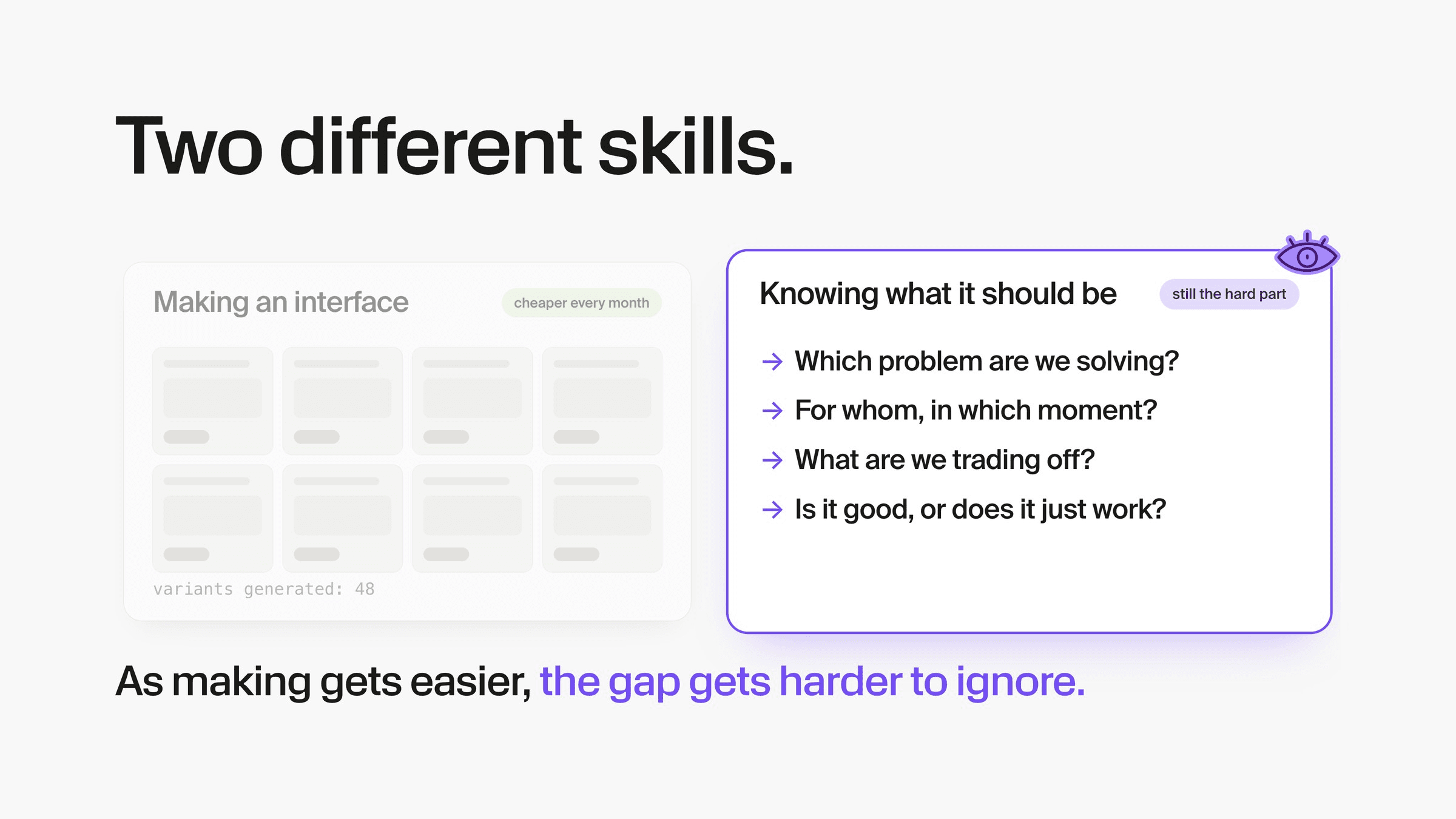
The role isn’t disappearing. It’s shifting — from making every piece ourselves to shaping the whole experience, bringing craft and judgment to every decision.
Making got cheaper. Good judgment didn’t.